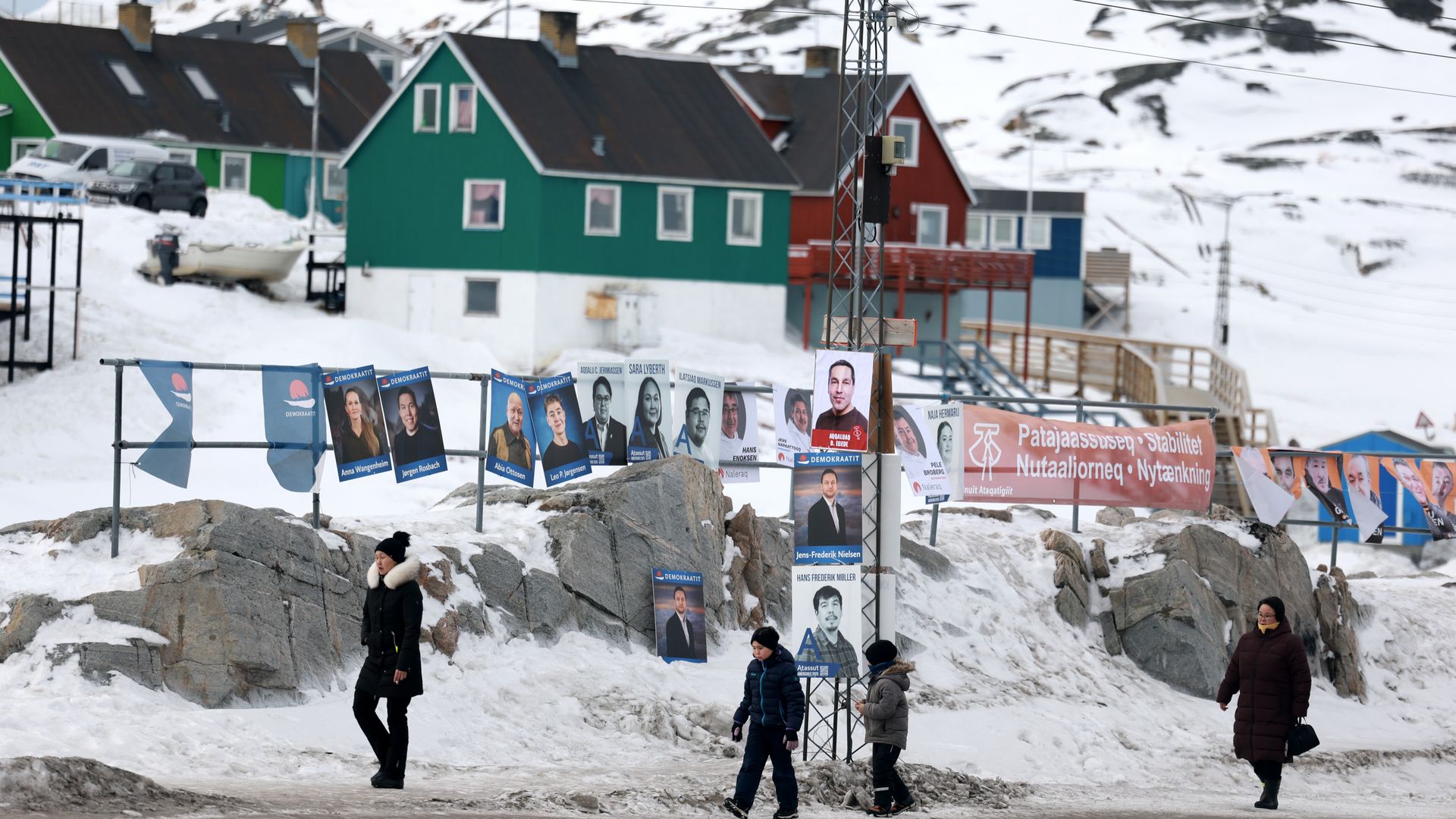
The election's central theme was Greenland's pursuit of independence from Denmark. Demokraatit advocates for a gradual approach to independence, emphasizing the need for economic and social development before full sovereignty. In contrast, the Naleraq party, which finished second with 24.5% of the votes and secured eight seats, supports a more immediate path to independence.
The traditionally dominant parties, Inuit Ataqatigiit and Siumut, experienced notable declines. Inuit Ataqatigiit received 21.4% of the votes (seven seats), while Siumut garnered 14.7% (four seats), reflecting a loss of five and six seats, respectively.
This electoral shift occurred against the backdrop of U.S. President Donald Trump's renewed interest in acquiring Greenland, a proposition met with widespread opposition among Greenlanders. All parliamentary parties uniformly rejected Trump's intentions, emphasizing the island's desire to determine its own future.
Jens-Frederik Nielsen, leader of Demokraatit, expressed readiness to engage in negotiations concerning Greenland's political future, highlighting the party's commitment to addressing domestic issues such as healthcare and education.
The voter turnout was notably high, with 70.9% of registered voters participating, indicating increased public engagement in the island's political discourse.
In summary, the 2025 Greenlandic parliamentary elections marked a pivotal moment, with voters favoring a measured approach to independence and signaling a desire for comprehensive domestic development before achieving full sovereignty.



0 Comments